The Icon
Jun 17, 2024
The Icon
"Don't be afraid to get closer"
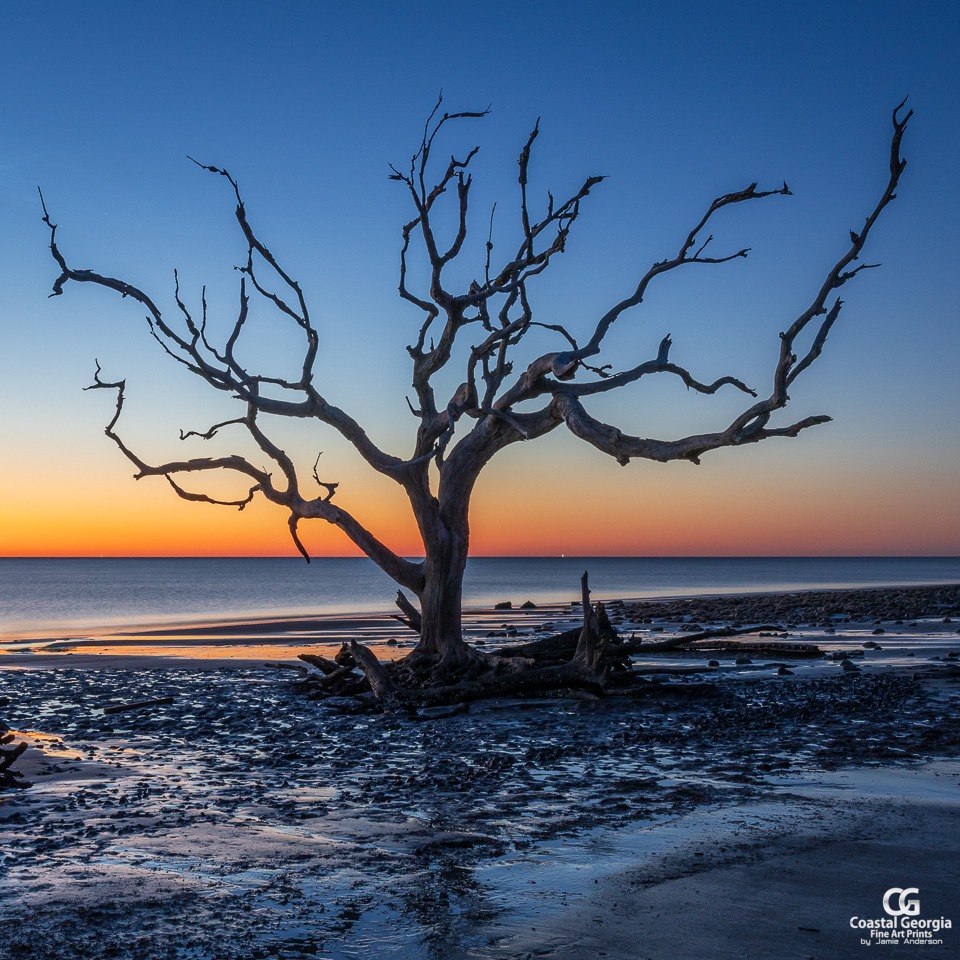
So, here I was on Jekyll Island last April '24, photographing yet again, the iconic driftwood tree that everyone seems to photograph when they come to Driftwood Beach on the north end of this island. In this blog, I'll explore this tree a little further and talk about how I was able to manage a First Place win with it at the Georgia Nature Photographer's Association (GNPA) annual Expo that was held on Jekyll Island this year.
First, lets explore what a driftwood tree is and what makes this one so iconic. A driftwood tree, or driftwood in general, usually refers to trees or limbs that were floating in the ocean and have washed ashore. The driftwood trees on this beach were actually living in a forest before erosion worked its way into the forest line. Erosion is common on our Coastal Georgia beaches. Usually each island will have an area that is eroding and another area where sand might be building up to create more land. So, erosion and salt water crept its way into the forest here and eventually killed the trees. Salt water also acts as a preservative, so although it kills the trees, it also helps to preserve the wood. So, these trees can remain for years after the salt water has killed. The erosion and wind will topple the trees eventually, however, this tree stands as it once stood and grew in the forest. It is a testament to its previous life in the forest.
The fact that it is still standing is one thing that sets it apart from the rest of the driftwood trees on the beach. Most, if not all, of the other driftwood trees on the beach have lost their root system and have toppled over. This one is still standing with its branches lifted up as if praising the Lord as it is greeted each day with a sunrise and after sunset it is greeted with the stars of the heavens. (UPDATE: It was felled during Hurricane Helene in Sept., 2024, so it is laying on its side now.)
Although this photograph did win a First Place in the GNPA Post Expo contest, I can't tell you exactly all the reasons any particular judge selected it out of all the other photos that were submitted in its particular category. All I can tell you is what my approach to capturing it was. Without going into all the technical details that you could consider for any given photograph, I'll just explore the composition of this photograph in this article. The technical camera settings that I used were f/14, ISO 400, and 5 second exposure if that helps you out any.
For the composition of this photograph, I can tell you that I didn't think the morning with it's cloudless sky would be all that great for a sunrise photograph. I was looking for something, anything, that I thought would be inspiring and to be honest I wasn't finding it. I also led some Milky Way field trips during the GNPA Expo, so the night before I was up half the night leading a group of photographers. This particular morning I was in a field trip being led by a nationally known photographer, Tony Sweet. He did come over and was looking at our composition through our flip out LCD screen and about the only thing he told me was, "Don't be afraid to get closer". Wonderfully simplistic advice, but it did help that shot. There were probably 5-6 other photographers trying for the same shot but if any one of us moved closer, we might be in the other's shot. So, I politely asked the other photographers if I could get closer to take a shot and they all agreed. I moved forward, got the shot, and then quickly moved back.
So, what did "getting closer" do for the shot. I shot this with a pretty wide angle lens at 31mm. However, if you have been down on Driftwood Beach on Jekyll Island, you know that there is a lot of other driftwood on the beach as well. It is actually a challenge to isolate any particular driftwood piece in a shot and exclude all the other ones unless you do get closer. So, getting closer helped to isolate this large tree and it helped pickup some of the detail in the tree limbs as well. This isolation was key to keeping the image simple and making it the main subject of attention in the photo. I did like the orange glow on the horizon that you get before sunrise. I knew that as soon as the sun did rise, it would be very bright and much harder to get a decent shot without any clouds in the sky.
There are many times in photography though that you are literally afraid to get closer. It's not always easy or a secure feeling to put yourself closer to the subject or try a different perspective, e.g. a very low ground level perspective. Sometimes putting yourself closer to the subject can also put you in front of other photographers, temporarily, who are trying for the same shot. Putting yourself closer, however, can bring out more depth in the photo which gives it more of a 3D feel vs. standing further back and taking the shot with a more powerful lens. Finally, getting closer can also bring out more detail in the photo.
What do you think? Feel free to comment below...